The Universe
Scrollable formula. Use Left and Right arrow keys to reveal hidden content.
Scrollable table. Use Left and Right arrow keys to reveal additional columns.
Scrollable figure. Use Left and Right arrow keys to inspect hidden content.
https://blackhole.org/universe/
Start where you are.
Follow the evidence outward.
Ask a question. Try an experiment. Explore planets, stars, black holes, and cosmic history—one discovery at a time.
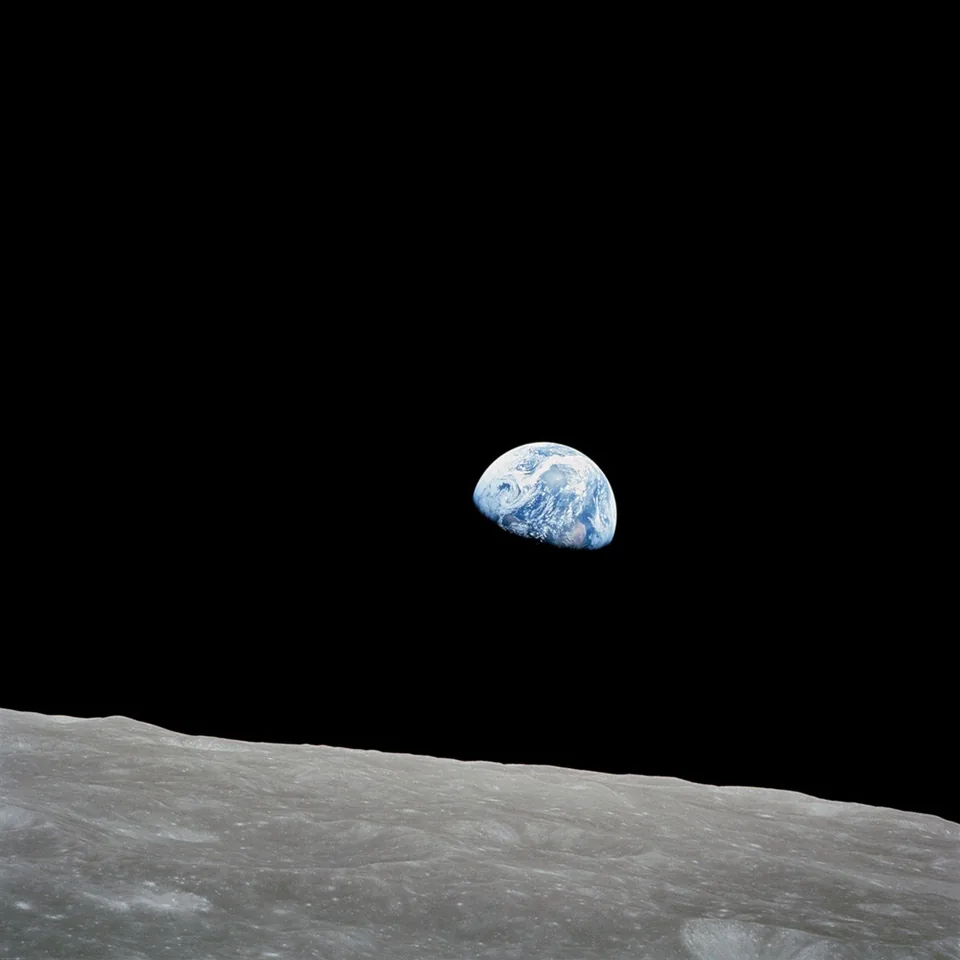
Earth above the lunar horizon, photographed from Apollo 8 in 1968. Our starting point is a world we can observe.
Credit: NASA/Bill Anders. Image source · Reuse terms
Which question pulls you in?
Section titled “Which question pulls you in?”No prior astronomy required. Every explanation gives you a way to begin—and a way to go further.
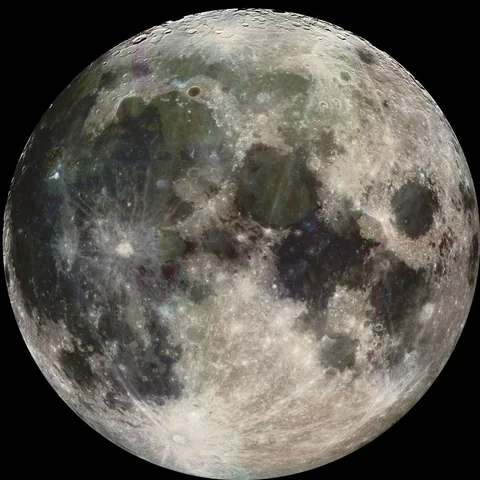 Earth, Sky & Time Why does the Moon change shape? Predict the Moon's appearance by following its sunlit half around Earth. Visual reasoning NASA/JPL/USGS. Image & details
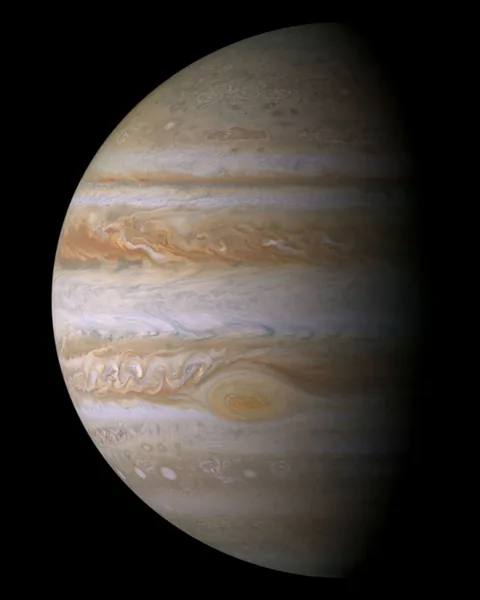 Solar System & Other Worlds How can we find a planet around another star? Read a transit signal and ask what else is needed before calling it a planet. Ratios and simple graphs NASA/JPL/Space Science Institute. Image & details
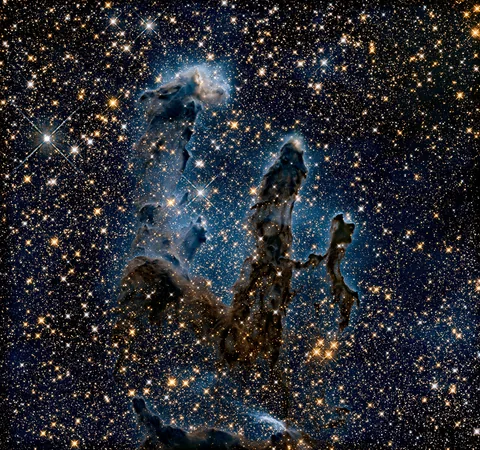 Light & Telescopes What can starlight tell us? Use a spectrum to reason about temperature, elements, and motion. Reading a labeled graph NASA, ESA/Hubble and the Hubble Heritage Team. Image & details
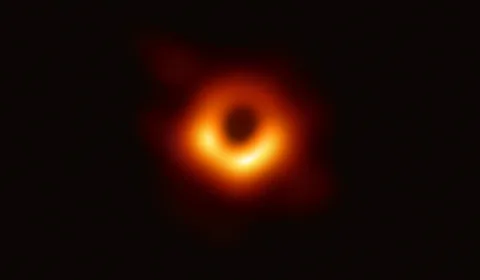 Black Holes Black Holes: Start Here Build an evidence-led picture of horizons, falling matter, and open questions. No prior astronomy EHT Collaboration. Image & details
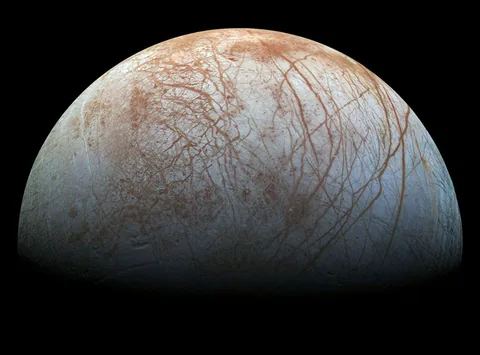 Life & Intelligence Are we alone? Evaluate habitability, possible biosignatures, and searches for technology with appropriate uncertainty. No prior astronomy NASA/JPL-Caltech/SETI Institute. Image & details
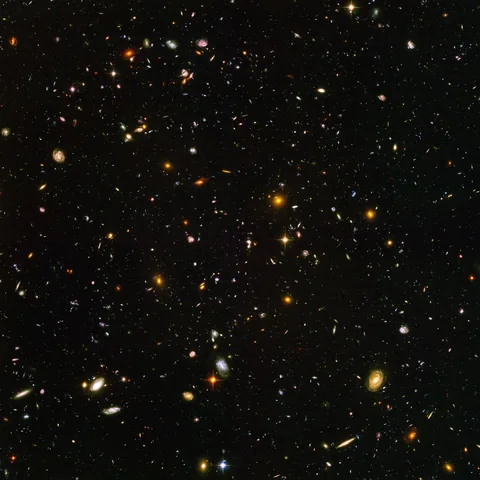 Cosmic History What does it mean for the universe to expand? Use changing distances and redshift to understand expansion and its limits. Ratios; optional algebra NASA, ESA, and S. Beckwith (STScI) and the HUDF Team. Image & details
Change something. Find out why.
Section titled “Change something. Find out why.”Predict a phase, uncover a hidden planet, or read a star’s message. Each investigation has a working model, an explained challenge, and a static example.
- Investigation Moon-phase laboratory Connect the orbital view with the Moon's appearance from Earth. Angles
- Investigation Exoplanet transit laboratory Compare an idealized transit with a documented observation. Ratios and graphs
- Investigation Spectrum detective Match spectral patterns with measured starlight. Graphs and ratios
Choose a journey
Section titled “Choose a journey”Follow a few questions in sequence. Stop, branch out, or return whenever you like.
- Reading journey Your first journey through astronomy Travel from the Moon to cosmic history through eight connected questions.
- Reading journey How astronomers know Follow the chain from direction and light to planetary, stellar, and galactic inferences.
- Reading journey From stars to black holes Connect stellar properties, evolution, and the evidence for black holes.
- Reading journey Worlds and life Connect planetary diversity, discovery, habitability and the search for life.
Find your place in the Universe
Section titled “Find your place in the Universe”Browse nine connected subjects, from the sky above you to the history of the cosmos.
- Earth, Sky & Time
- Solar System & Other Worlds
- Light & Telescopes
- Stars & Stellar Systems
- Stellar Evolution & Remnants
- Black Holes
- Galaxies & Cosmic Structure
- Life & Intelligence
- Cosmic History
Wondering how these distances fit together? See the cosmic-distance ruler.
Bring a question into the classroom. Six activity packs pair predictions with worked explanations, printable activities and indoor alternatives. No student account required.
Ready for deeper physics? Learn offers structured preparation; the Library develops the mathematics behind these ideas. Follow either when you want more.